Please Touch
On the luxurious textiles that make colder days feel softer.
Some materials are understood by sight. Others only reveal themselves through touch.
A cashmere coat may appear beautifully cut, but its true character is felt when the fabric meets the skin. A mohair blanket changes a room before we have even unfolded it. Wool surrounds the body with a warmth that feels both physical and instinctive.
As the days become colder, these materials move closer to us. They cover our beds, soften our chairs and wrap around our shoulders. The boundaries between the wardrobe and the interior begin to dissolve: the coat becomes a portable shelter; the blanket, an intimate form of architecture.
This is the quiet luxury of textiles. Not simply how they look, but how they make us feel.
The intimacy of softness
Touch is our first language.
Before we understand form, colour or composition, we understand temperature and texture. We recognise the comfort of softness, the reassurance of weight and the subtle pleasure of a fabric that responds to the body.
Perhaps this is why textiles have such an immediate emotional presence. Unlike harder materials, they do not ask to be observed from a distance. They crease, fold and move. They carry the shape of the person who wears them and the traces of the life unfolding around them.
A blanket left across a sofa recalls the evening before. A velvet cushion changes tone where a hand has passed over it. A well-worn wool coat begins to follow the posture of its owner.
These are not signs of decline. They are signs of intimacy.
Cashmere: warmth without weight

Cashmere has long been associated with luxury, but its appeal is remarkably quiet.
It does not need an elaborate pattern or visible embellishment. Its value is communicated through lightness, warmth and the almost imperceptible softness of its fibres. A fine cashmere blanket can offer warmth without heaviness; a coat can protect the body while retaining a sense of ease.
This balance is part of its beauty. Cashmere creates comfort without excess.
In an interior, it brings the same sense of intimacy as it does to clothing. Draped over the arm of a chair or folded at the end of a bed, it invites use. Its presence is subtle, but the room feels different because of it—softer, calmer and more attentive to the body.
Mohair: a material made for light

Mohair possesses a more expressive softness.
Its long fibres create a gentle halo, allowing the surface to hold and diffuse light. Colours appear unusually deep in mohair: muted earth tones become richer, while pale shades seem almost illuminated from within.
Used in a blanket or cushion cover, mohair introduces texture without visual weight. It has volume, but also air. The fibres shift slightly with touch, creating a surface that never feels entirely still.
There is something particularly comforting about this imperfection. Mohair does not present a smooth, controlled finish. It feels alive—softly irregular, tactile and responsive to its surroundings.
Wool: the original shelter

Before luxury became associated with rarity, it was connected to protection.
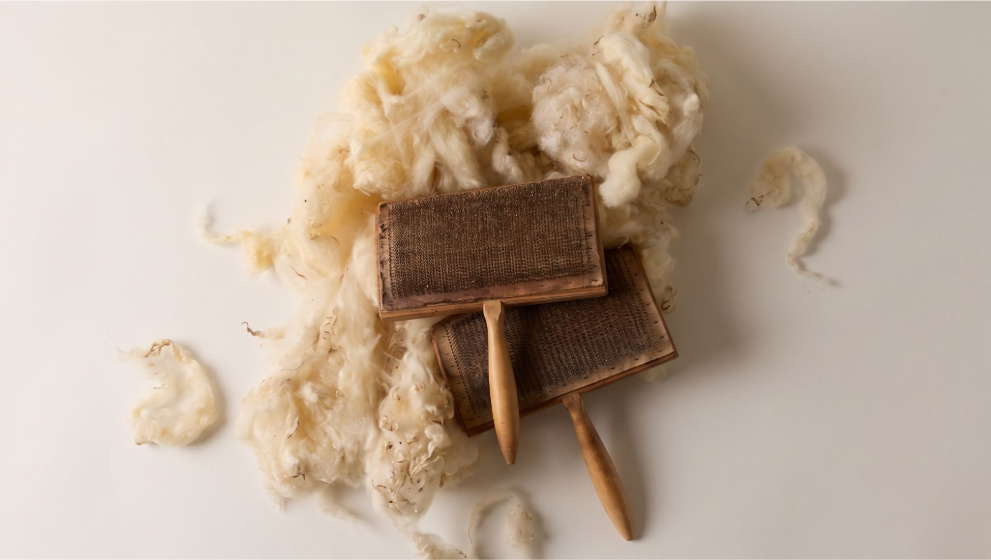
Wool is one of our oldest forms of shelter. It has wrapped bodies, covered beds and insulated homes across cultures and generations. Its warmth comes not only from the material itself, but from this long relationship with human life.
A dense wool coat creates a boundary between the body and the weather. A generous blanket turns a corner of the home into a place of retreat. Upholstery in brushed or bouclé wool softens the architecture of a chair, making its structure feel more inviting.
The finest wool textiles retain this practical intelligence while offering extraordinary sensory depth. Some are smooth and closely woven; others are felted, curled or deliberately substantial. Each creates a different experience of warmth.
Luxury, here, is not fragility. It is the pleasure of a material made to protect us.
Alpaca: softness with character

Alpaca offers warmth with a distinctive fluidity.
Its fibres are smooth and naturally lustrous, giving blankets and garments an elegant drape. It feels soft against the skin, yet retains a certain wildness—a connection to landscape, climate and animal origin.
In neutral shades, alpaca can appear almost sculptural. A loosely woven throw gathers in folds, catching shadows between its fibres. A brushed coat moves gently around the body rather than holding a rigid shape.
Its beauty lies in this tension between refinement and nature. The material feels precious, but never overly polished.
Dressing the body, dressing the home
The language of clothing and interiors has always been closely connected.
We speak of dressing a room, layering materials and composing a palette. A sofa can be tailored. A curtain can fall like a garment. A blanket can be arranged with the apparent effortlessness of a scarf.
During colder months, this relationship becomes more visible. We reach for similar qualities in what we wear and how we live: warmth, softness, protection and a sense of enclosure.

A wool coat and a wool-covered chair answer the same fundamental need. A cashmere scarf and a cashmere throw offer the same intimate pleasure. Both create a small, tactile distance between the body and the outside world.
This is what makes luxurious textiles meaningful. Their value is not found in softness alone, but in the rituals they make possible.
To return home and remove a heavy coat. To settle beneath a blanket as the light begins to fade. To feel the texture of a cushion beneath the hand. To find warmth in an object chosen not only for the room, but for the body that lives within it.
The best textiles do more than decorate our lives.
They hold us.
Discover a world shaped by texture, warmth and touch.