The Most Beautiful Hotels for Design Lovers
Where architecture, craftsmanship, and atmosphere become one.
There are hotels that offer impeccable service, and then there are hotels that become destinations in themselves—places where every corridor, every material, every piece of furniture tells a story.
For design lovers, the greatest luxury isn't simply staying somewhere beautiful. It's inhabiting a carefully curated world, where architecture, interiors, light, art, and craftsmanship exist in perfect harmony.
These hotels remind us that extraordinary interiors are never created through decoration alone. They are built through atmosphere, intention, and emotional connection.
Here are five properties that continue to redefine contemporary hospitality—and inspire designers around the world.
Ett Hem — Stockholm, Sweden

"The home everyone wishes they had."
There are luxurious hotels, and then there is Ett Hem.
Designed by British interior designer Ilse Crawford, the hotel completely transformed the perception of luxury hospitality by replacing grandeur with intimacy. Every room feels lived in rather than decorated. Books rest naturally on tables, flowers seem freshly arranged, and every object appears to have been collected over decades instead of purchased for a project.
Nothing feels staged. Warm woods, handcrafted textiles, vintage furniture, muted palettes and natural light create an atmosphere closer to an extraordinary private residence than a traditional hotel.
It became the global benchmark for residential interiors because it proved that true luxury is comfort elevated through exceptional design.
For interior designers, Ett Hem is a masterclass in creating emotional architecture.
Il Sereno — Lake Como, Italy

"Minimalism meets Italian craftsmanship."
While most Lake Como hotels celebrate classical opulence, Il Sereno chose a completely different path.
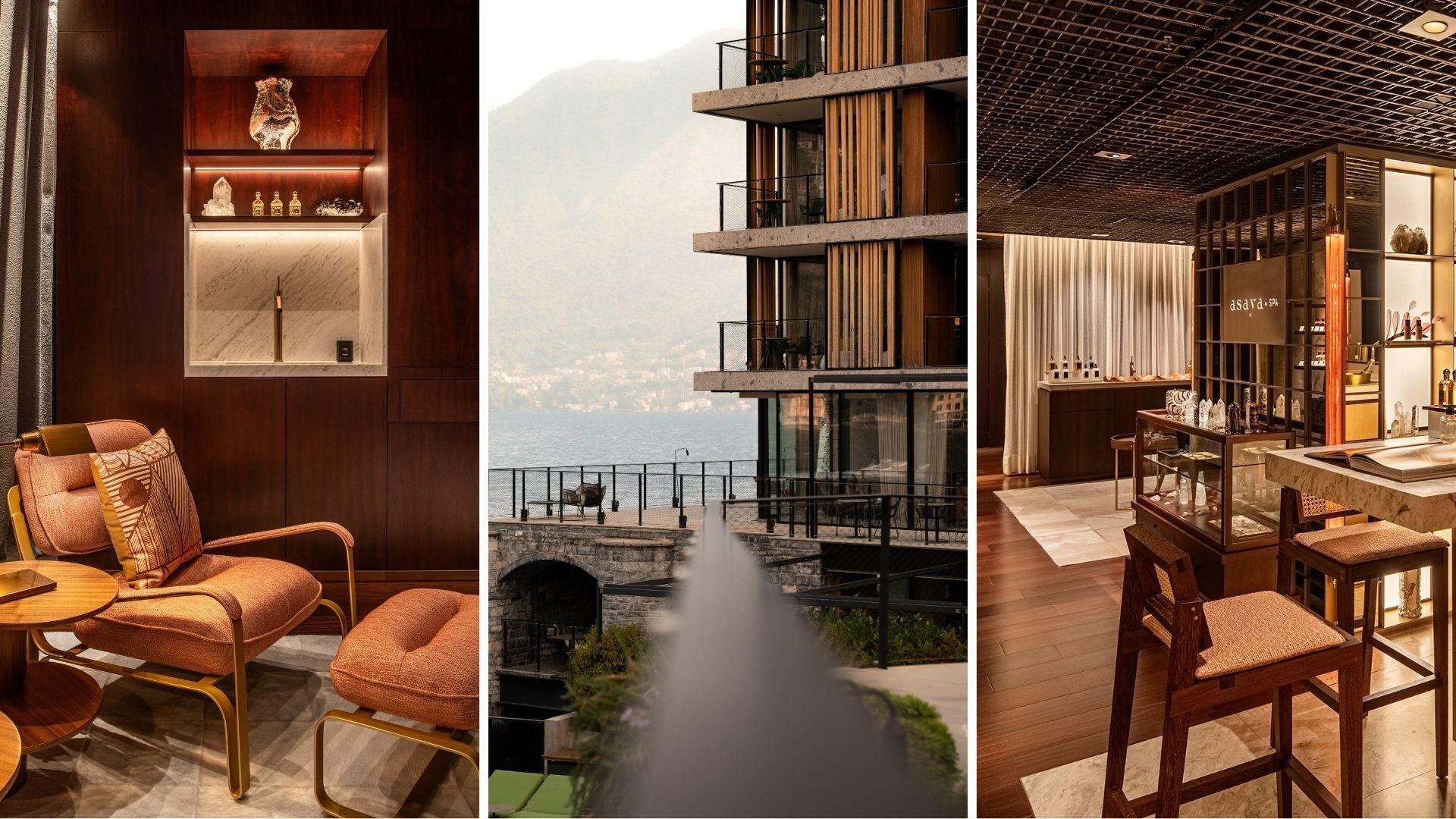
Designed by renowned designer Patricia Urquiola, the hotel embraces contemporary architecture without ever feeling cold.
Stone, walnut, bronze, leather and linen form a restrained material palette where texture becomes the true ornament. Every custom-designed piece of furniture contributes to a quiet dialogue between the interiors and the surrounding lake.
Floor-to-ceiling glazing dissolves the boundary between architecture and landscape, allowing nature to become part of the interior composition. Il Sereno demonstrates that contemporary luxury doesn't require excess—it requires confidence.
Every detail is intentional.
Hotel Costes — Paris, France

"The timeless icon of Parisian sophistication."
Few hotels have influenced luxury interiors as profoundly as Hotel Costes.
Its signature atmosphere has inspired countless restaurants, boutiques, private residences and hospitality projects across the globe.
Deep burgundy velvet, antique mirrors, aged brass, dramatic lighting, rich woods and layered textures create an unmistakable sense of intimacy and mystery.
Unlike minimalist interiors that celebrate restraint, Hotel Costes embraces theatricality.
The result is neither excessive nor overwhelming.
It is perfectly choreographed maximalism—sensual, cinematic and endlessly atmospheric.
Every room invites guests to slow down, observe, and become part of the scene itself.
Santa Monica Proper — California, USA

"Kelly Wearstler's sculptural world."
Few designers possess a visual language as immediately recognisable as Kelly Wearstler.
At Santa Monica Proper, her fearless approach to interiors reaches one of its most refined expressions.
Organic forms meet bold geometry.
Vintage pieces coexist with contemporary art.
Natural stone, handcrafted ceramics, textured plaster and custom furniture create spaces that feel layered yet remarkably balanced.
Nothing matches. Everything belongs.
The hotel celebrates individuality over perfection, proving that memorable interiors emerge from thoughtful curation rather than rigid design rules. It is a living lesson in how personality becomes luxury.
Rosewood São Paulo — Brazil

"Where hospitality becomes an immersive work of art."
Perhaps no recent hotel has captured the imagination of the design world quite like Rosewood São Paulo.
Conceived by architect Jean Nouvel, with interiors by Philippe Starck, the hotel is more than accommodation—it is a cultural institution.
Hundreds of commissioned artworks by Brazilian artists are integrated throughout the property, blurring the line between hotel, gallery and architectural landmark.
Lush vegetation climbs through the building, handcrafted materials celebrate local craftsmanship, and contemporary design coexists effortlessly with historical architecture.
Every room tells a different story. Every corridor reveals another artistic intervention.
Rosewood São Paulo demonstrates that hospitality can become a platform for culture, craftsmanship and creative expression.
What These Hotels Teach Us About Great Design

Although radically different in style, these five hotels share remarkably similar principles.
They design for emotion before aesthetics.
They privilege authentic materials over trends.
They celebrate craftsmanship instead of perfection.
They understand that light shapes atmosphere as much as furniture.
And above all, they create spaces that people remember—not because they are extravagant, but because they make them feel something.