Luxury Brands Taking Over the World's Most Iconic Beach Clubs
From Saint-Tropez to Capri, luxury is no longer confined to boutiques. This summer, the world's most iconic beach clubs have become immersive destinations where fashion, hospitality, architecture and design converge.
For decades, luxury brands built desire through exclusivity.
Today, they build it through experience.
Across the Mediterranean, the world's most prestigious maisons are transforming legendary beach clubs into seasonal expressions of their identity. From custom-designed sunbeds and branded cabanas to exclusive restaurants, boutiques and curated events, these takeovers have become one of luxury's most powerful marketing strategies. But behind the colourful parasols and Instagram-worthy scenery lies something far more significant: a new definition of luxury.
One that is lived rather than purchased.
The Rise of Experiential Luxury

The modern luxury consumer isn't simply looking for beautiful objects.
They are searching for unforgettable moments.
As luxury spending increasingly shifts towards experiences, brands have recognised that emotional connection often creates more value than traditional advertising. Rather than asking customers to visit a boutique for a few minutes, they invite them to spend an entire day immersed in the world of the brand.
Guests don't simply see a collection.
They live inside it.
Saint-Tropez: The Ultimate Luxury Playground

No destination embodies this evolution more than Saint-Tropez.
Every summer, the French Riviera becomes an open-air exhibition of luxury lifestyle, where legendary beach clubs collaborate with the world's most celebrated fashion houses.
At Shellona, Mediterranean minimalism meets contemporary luxury.
At Casa Amor, bohemian elegance attracts creatives, collectors and international tastemakers.
Meanwhile, Club 55 continues to represent effortless Riviera sophistication, proving that true luxury often feels beautifully understated.
These destinations are no longer simply places to spend the afternoon.
They have become cultural stages where hospitality, fashion, art and design intersect.
The Art of Creating a Destination

Among the pioneers of this movement is Dior.
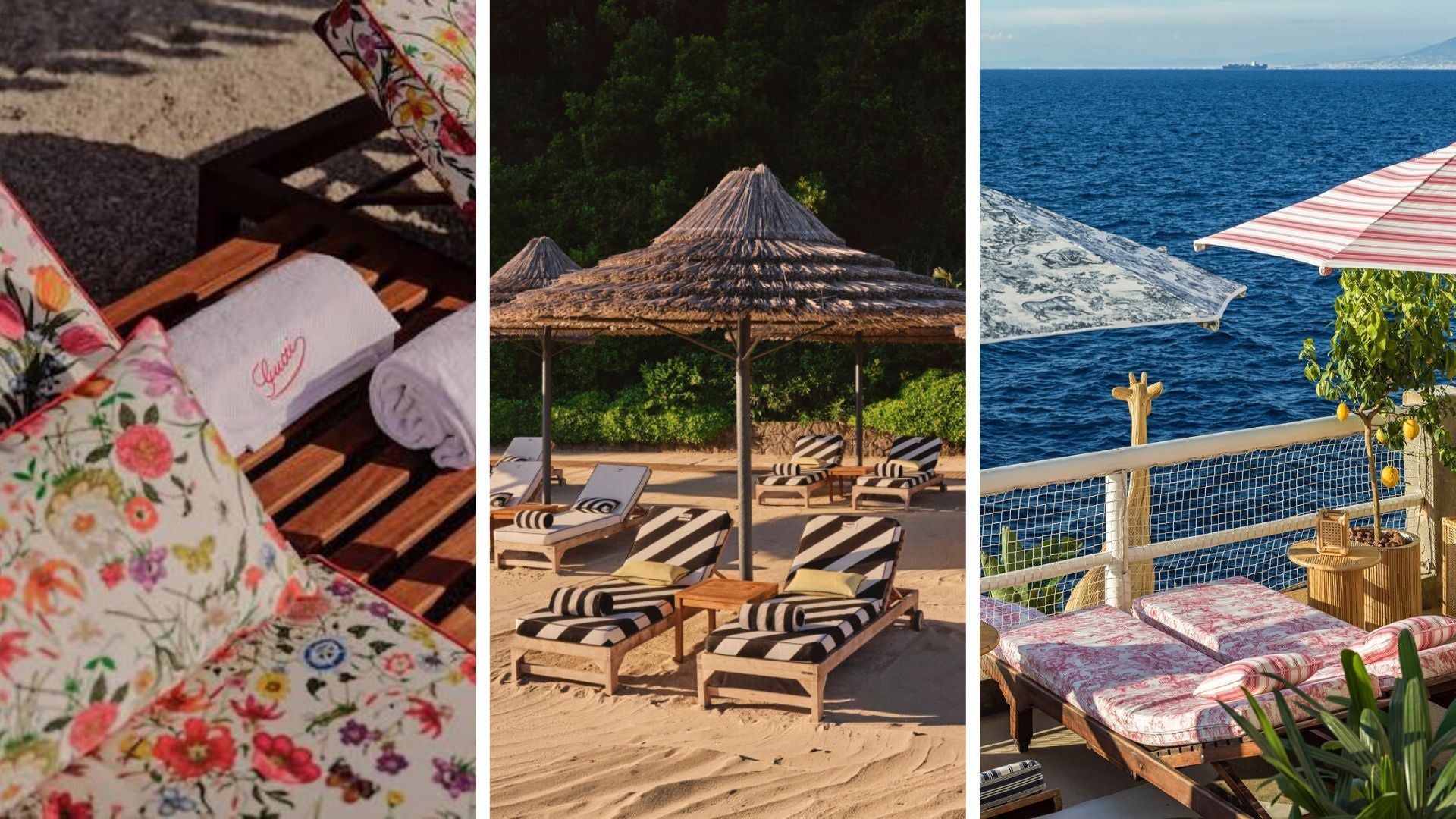
Each summer, the Maison reinvents parts of the Mediterranean through its celebrated Dioriviera concept.
Whether in Saint-Tropez, Capri, Ibiza or Mykonos, Dior transforms entire environments with its instantly recognisable Toile de Jouy motifs.
Every detail contributes to a seamless universe where architecture, decoration and hospitality speak the same visual language.
Visitors don't simply recognise the brand.
They temporarily inhabit it.
The Power of Visual Identity

If Dior creates elegance, Jacquemus creates immediacy.
Few brands understand visual storytelling as intuitively as the French designer.
Its collaborations with beach clubs have become global sensations thanks to bold colour palettes, sculptural parasols and unmistakable Mediterranean simplicity.
The result? Entire destinations become instantly recognisable through a single photograph.
In an age where every guest carries a camera, memorable design has become one of luxury's greatest marketing assets.
Every shared image extends the experience far beyond the beach itself.
More Than Fashion: A New Era of Hospitality
Luxury hospitality has evolved dramatically.
Hotels, restaurants and beach clubs are no longer simply hospitality businesses.
They are platforms for storytelling.
Brands including Louis Vuitton, Dolce & Gabbana, Gucci, Fendi, Loro Piana and Missoni have embraced this philosophy, creating immersive collaborations that blur the boundaries between retail, travel and interior design.

Guests discover products naturally within beautifully designed environments rather than through conventional displays.
The experience feels authentic because it is integrated into everyday moments.
Why Beach Clubs Have Become the Ultimate Marketing Platform

There is a reason these activations continue to multiply every summer.
Beach clubs offer something few retail environments can replicate: Emotion.
People associate holidays with celebration, relaxation and connection. When a luxury brand becomes part of those memories, it occupies a far deeper place in the customer's imagination. Unlike traditional advertising, experiential luxury invites participation.
Visitors don't simply observe the brand. They become part of its story.
What This Means for the Future of Luxury

These seasonal beach club transformations reveal something much larger than a summer trend. They represent the future of luxury itself. Consumers increasingly seek brands capable of creating complete worlds rather than individual products.
Objects become part of a broader lifestyle. Hospitality becomes an extension of brand identity. Design becomes emotional architecture.
As the boundaries between retail, travel, art and interior design continue to dissolve, luxury brands are discovering that the most valuable product they can offer is not an object.
It is a feeling.
The MAEVE Perspective
At MAEVE, we have always believed that extraordinary objects are only the beginning. The true value of design lies in its ability to shape atmosphere. To encourage conversation around a beautifully dressed table. To transform natural light through sculptural forms. To elevate everyday rituals into lasting memories.
Whether overlooking the Mediterranean, welcoming friends into a summer home, or celebrating long evenings that unfold slowly, thoughtfully crafted objects have the power to become part of life's most meaningful experiences.
Because luxury isn't defined by excess.
It is defined by intention.