Design Agenda: May Shows
NADA | Frieze New York | Independent New York | NYCxDESIGN | TEFAF New York | ICFF
Every May, New York becomes less a city and more a living atlas of contemporary taste. Collectors, architects, curators, designers, editors, and makers move between Chelsea warehouses, Upper East Side salons, industrial piers, and museum halls in search of what feels essential now.
This year, the conversation felt quieter. More deliberate. Less spectacle, more substance. Across the fairs and design week presentations, there was a visible shift away from excess and toward material intelligence, emotional resonance, and collectable design rooted in permanence rather than performance.
In many ways, May 2026 confirmed what the luxury sector has been slowly admitting: cultural value is no longer created through noise alone. Craft, intimacy, and point of view have become the new markers of relevance.
NADA New York

The return of intimacy
Among all the fairs, NADA felt the most emotionally charged. Housed once again inside the industrial geometry of the Starrett-Lehigh Building, the fair leaned into emerging voices, experimental materials, and presentations that felt deeply human rather than commercially polished.
Critics described the atmosphere as “a sprawling laboratory for sharp voices,” where emotionally charged figurative works sat beside materially obsessive craft experiments.
Unlike the larger blue-chip fairs, NADA’s power came from scale and vulnerability. Smaller works demanded close viewing. Ceramics carried fingerprints. Textile installations embraced imperfection. Several reviewers noted that the strongest booths rejected monumental gestures in favor of intimacy and tactility.
There was also a recurring conversation around accessibility. While early sales appeared slower than in previous years, galleries remained optimistic about collectors reconnecting with younger artists and more attainable works.
This feels significant. In a market fatigued by spectacle, NADA reminded visitors that discovery still matters.
For brands and studios observing the fair, the lesson was clear: emerging culture is increasingly shaped through atmosphere, texture, and emotional specificity rather than scale.
Frieze New York

Between commerce and cultural theatre
Frieze remains the gravitational center of New York Art Week, but this year the discourse around the fair was more nuanced.
Held at The Shed in Hudson Yards, the fair gathered nearly 70 galleries from 26 countries, with a particularly strong presence from Latin American and African galleries.
Critics praised the global diversity and curatorial ambition of the Focus section, which highlighted younger galleries and artists exploring ideas of world-building, memory, identity, and fractured systems.
Yet online conversations revealed another sentiment: fatigue with overly commercial presentations. Some visitors described the fair as “smaller” and “less ambitious” than earlier editions, while others felt the strongest discoveries were happening outside the main fair, in independent galleries across Tribeca and Chinatown.
That tension, between institutional polish and authentic cultural discovery, may be the defining mood of Frieze in 2026.
Still, Frieze excelled in one area: atmosphere. Fashion and art dissolved into each other completely. Visitors arrived dressed like installations themselves, turning the fair into a study of contemporary identity and personal curation.
The strongest takeaway was not necessarily a single artwork, but a broader cultural shift: collectors are increasingly searching for meaning, narrative, and emotional intelligence over obvious status signals.
A sentiment echoed across luxury culture more broadly, where value is becoming tied less to logos and more to memory, provenance, and craftsmanship.
Independent New York

Curated worlds over crowded booths
If Frieze represents the global stage, Independent feels like a private conversation.
This year’s edition continued its reputation for thoughtful, highly curated presentations. The fair’s most discussed moment was the installation of rare Comme des Garçons pieces presented as sculptural objects rather than garments. Visitors walked through a metal scaffolding runway while the clothes themselves became silent observers.
The gesture captured something larger happening across design culture: disciplines are collapsing into one another. Fashion is becoming installation. Furniture behaves like sculpture. Decorative objects operate as emotional artefacts.
Online discussions repeatedly described Independent as “the best one really,” praising its balance between established names and emerging experimentation.
What makes Independent resonate is its resistance to visual overload. Booths feel spacious. Works breathe. The fair understands the power of restraint — an idea increasingly shaping contemporary luxury aesthetics as well.
NYCxDESIGN

Design as ritual
Across the city, NYCxDESIGN extended these conversations into interiors, furniture, and collectible objects.
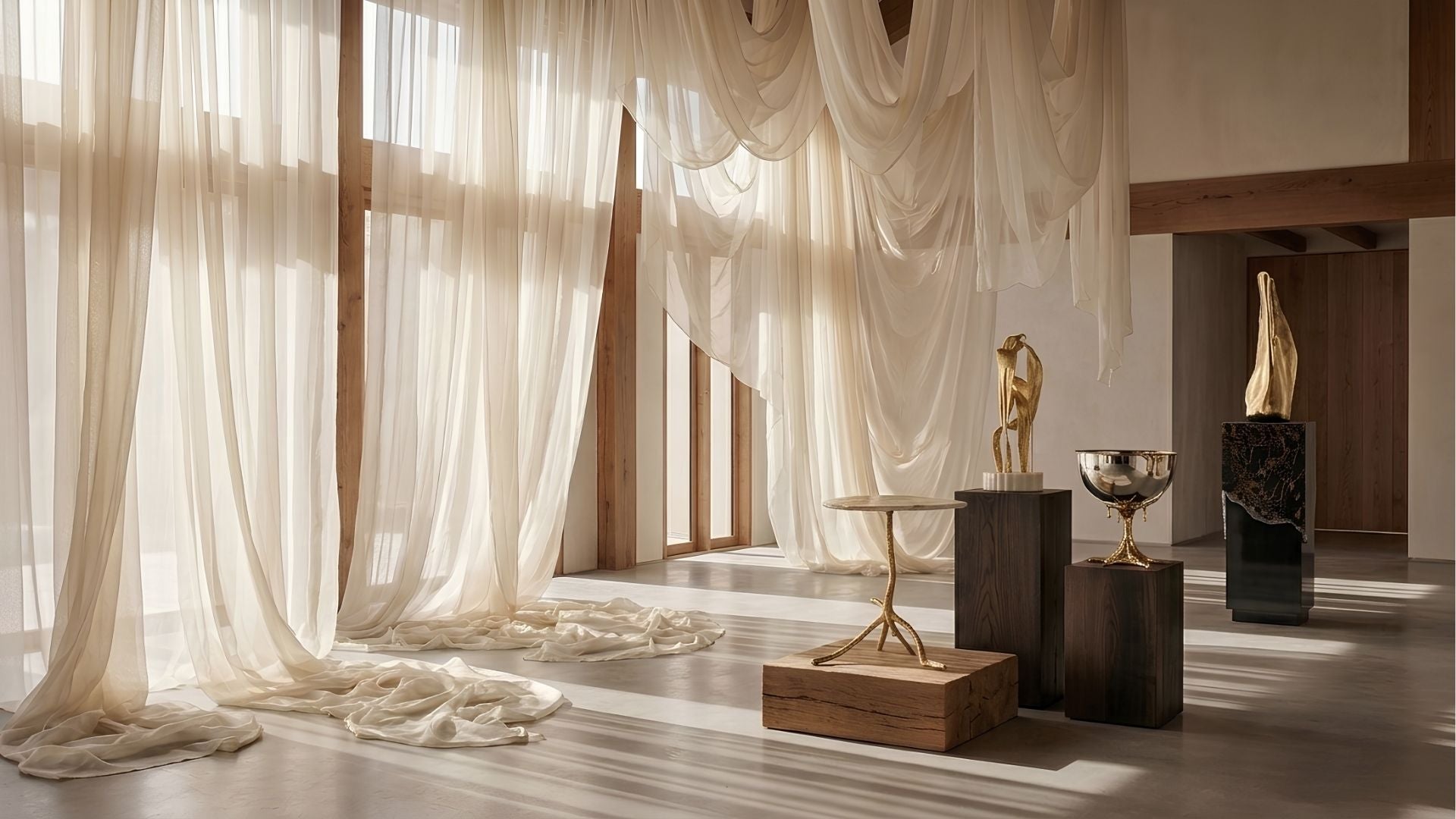
Rather than focusing on futuristic novelty, many studios embraced raw materials, visible craftsmanship, and emotionally grounded forms. Stone, patinated metals, textured woods, and hand-finished surfaces appeared repeatedly.
The strongest presentations did not feel “designed” in a traditional sense. They felt discovered. Quietly archaeological. Objects shaped by process rather than perfection.
This mirrors a larger shift happening within luxury design culture, where younger audiences increasingly seek authenticity, tactility, and permanence over overt opulence.
The language surrounding collectible design is changing too. Designers are speaking less about products and more about rituals, memory, atmosphere, and sensory presence.
A direction deeply aligned with MAEVE’s own philosophy of objects as sculptural presences that elevate daily life through touch, shadow, and material dialogue.
TEFAF New York

Permanence as the ultimate luxury
If NADA explored experimentation, TEFAF explored permanence.
Inside the historic Park Avenue Armory, the fair gathered nearly 90 international exhibitors presenting everything from antiquities and modernist furniture to contemporary sculpture and rare jewelry.
Reviewers repeatedly highlighted TEFAF’s extraordinary breadth and museum-level quality. In a crowded art week, the fair distinguished itself not through trendiness, but through rigor, provenance, and historical continuity.
Collectors responded strongly to works with exceptional craftsmanship and documented histories, reinforcing a broader market appetite for objects that feel enduring rather than seasonal.
In many ways, TEFAF embodied the growing return to “quiet luxury” — not as a trend, but as a deeper cultural longing for longevity, expertise, and emotional permanence.
ICFF

The softening of modernism
At ICFF, contemporary furniture and interiors continued moving away from rigid minimalism toward warmer, more tactile environments.
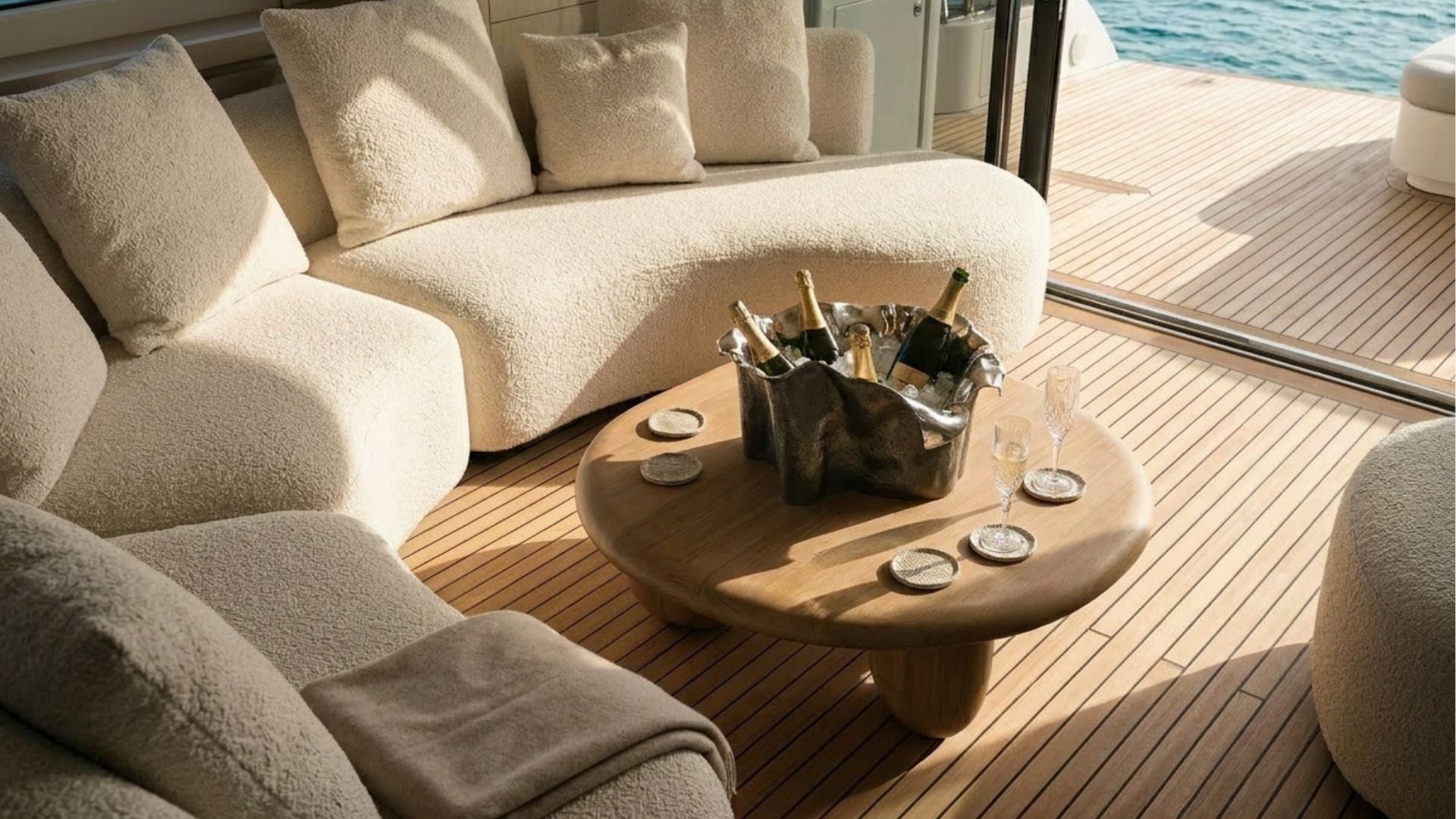
Rounded silhouettes, hand-finished surfaces, mineral palettes, and sculptural lighting dominated the conversation. Technology remained present, but increasingly invisible, integrated quietly into experiences rather than displayed as innovation for its own sake.
Many presentations blurred the line between collectible object and functional design, reinforcing the growing demand for pieces that carry emotional and artistic presence within domestic life.
The strongest works shared a common quality: they invited slowness.
Not everything needed to announce itself immediately.
What remained after May
Across every fair, one idea kept resurfacing: people are searching for objects, and experiences, that feel human again.
In a moment saturated with algorithmic imagery and accelerated consumption, the most memorable presentations were the ones rooted in material honesty, cultural depth, and emotional texture.
The future of luxury may not belong to the loudest brands or the largest installations. It may belong to the studios, galleries, and makers capable of creating quiet moments of recognition.
Objects with soul.
Spaces with atmosphere.
Craft that leaves a trace of the hand behind it.
Or, as MAEVE describes it so precisely:
“Art that inhabits daily life. Beauty that deepens with time.”